
Who Gets Tax-Free Tips? Rules Detail What Counts for New Break
No tax on tips | Tax break | Tax law | October 22, 2025
This Week's Quote:
"Teamwork begins by building trust. And the only way to do that is to overcome our need for invulnerability."
- Patrick Lencioni
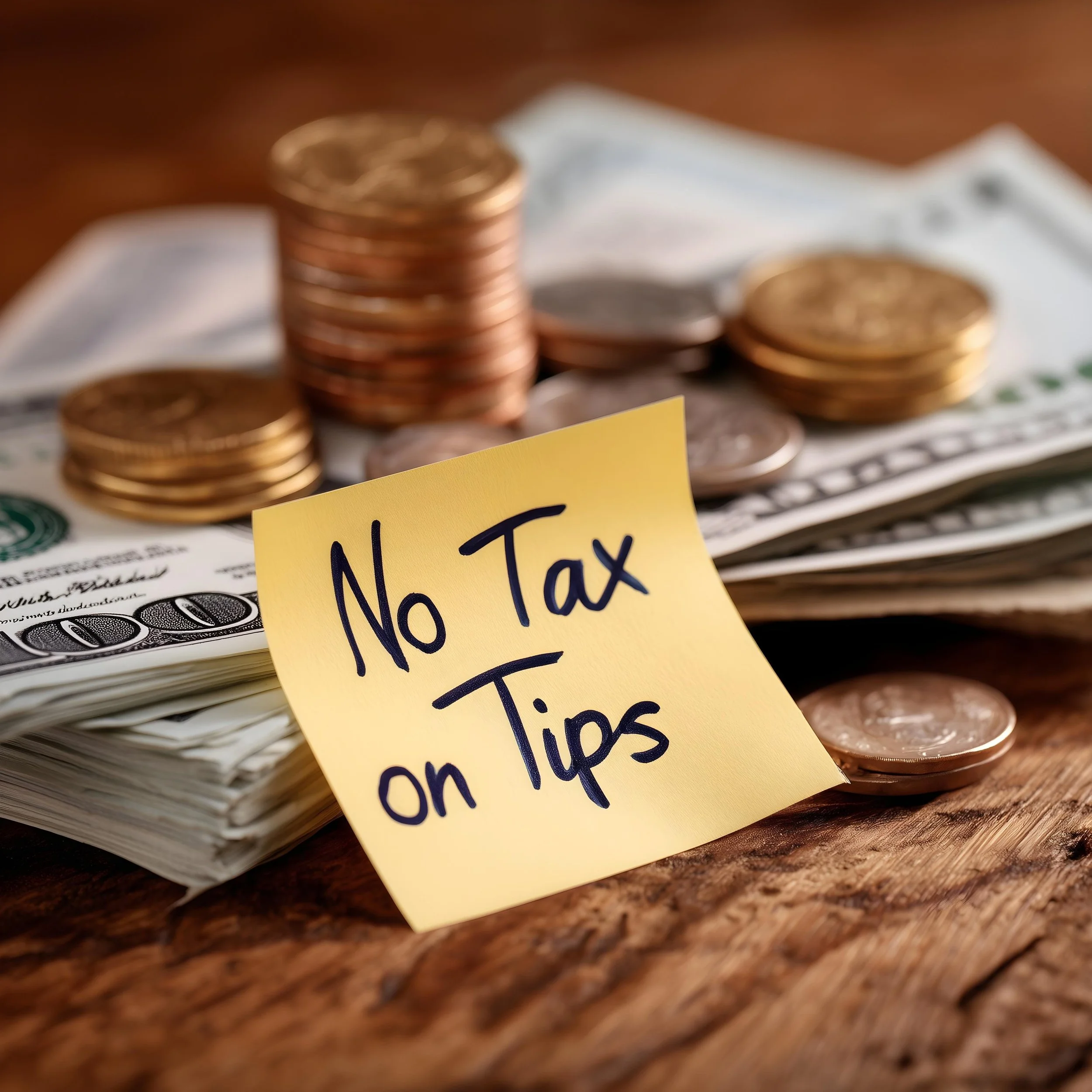
WASHINGTON—The government’s initial list of jobs eligible for the new “no tax on tips” deduction includes tennis teachers, dancers, wedding planners and social-media influencers, opening the benefit to a range of Americans far beyond waiters and baristas.
That doesn’t mean everyone on the list will get their tips tax-free.
For a final green light, workers in listed tipped occupations will have to make sure they or their employers aren’t included on a separate list of ineligible industries, including health, law, performing arts and athletics. Soon-to-be-released Treasury Department regulations are expected to begin detailing how this all will work for the transitional tax year of 2025 and beyond.
“It’s going to be a very interesting tax return preparation season for the next three years while this is in effect,” said Miklos Ringbauer, a CPA in Southern California. The deduction is scheduled to expire after 2028.
Congress included “no tax on tips” in the fiscal law that President Trump signed July 4. The deduction took effect retroactively for 2025 and will be part of the tax-filing season in early 2026. The administration is now turning Trump’s four-word campaign slogan, an idea popular in both parties, into the nitty-gritty reality of tax rules.
Many hair stylists and waiters should largely avoid the industry limitations and be eligible for the full $25,000 income-tax deduction, which starts phasing out once income reaches $150,000 for individuals and $300,000 for married couples. But the industry-based restriction could prevent some singers, personal trainers and home aides from getting tax-free tips.
In another wrinkle, two taxpayers doing the same tipped job could get different tax results depending on whom they work for.
Consider a bartender at a baseball stadium. If she is an independent contractor or works for a food-service company, she probably qualifies. But if she is employed by the team—in the business of athletics—she might not. A self-employed singer who gets tips could well be ineligible for the tips deduction. But a singer employed by a casino could likely get the deduction.
Treasury officials used tax-return data to determine which occupations typically receive tips, creating the expansive directory that ranges from bartenders and wait staff to electricians and plumbers to math tutors and tour-bus drivers. Treasury Secretary Scott Bessent has been touting the list and the deduction at recent restaurant visits.
For taxpayers working in tipped occupations on Treasury’s new list, the law denies them the tips deduction if they are in “specified service trades or businesses,” or SSTBs. That restriction also applies if they are employees working for a company in that business.
Treasury’s forthcoming rules are expected to explain how taxpayers can determine their deduction and will begin implementing the SSTB limits.
Congress spelled out the SSTB category in 2017, when it wrote a tax law that created a 20% deduction for certain closely held businesses. The SSTB label prevents many high-earning lawyers and doctors from getting that break and can apply to people receiving endorsement income or making paid media appearances. This year, Congress reused that definition—which hasn’t been thoroughly tested in litigation—for “no tax on tips” as lawmakers tried to limit the deduction’s fiscal cost.
Treasury officials said the SSTB restriction is one of the more challenging provisions to turn into workable regulations. Officials said they are trying to provide an accessible tax benefit for working families that doesn’t force people to jump through a bunch of hoops. But they also must stay within the statute.
The administration will write the regulations to “give as many people as much access as possible,” said Thomas Gorczynski, who owns a tax firm in Tempe, Ariz. “Wherever there’s ambiguity, it’s going to lean toward giving more people deductions.”
The Treasury rules will likely address other elements, including a requirement that tips be voluntary payments. That means restaurants and caterers might need to abandon mandatory service charges if they want that money counted as tax-free tips for their workers. The rules will likely require that customers be able to adjust such service charges to zero, Treasury officials said.
The administration might not release all of the SSTB rules immediately, and officials must sort through gray areas in definitions. The tipped-occupation list includes digital content creators, but the SSTB guidelines can be murkier. Is a videogame streamer a performing artist? Does someone posting TikTok videos about consumer products fall under the SSTB category for endorsements and media appearances?
Taxpayers will also have to know whether their employers are SSTBs, something that hasn’t previously been relevant to many workers or companies.
Large corporations and nonprofits that haven’t needed to determine their SSTB status might need to assess that.
Because the tip deduction is retroactive, implementation could be particularly tricky for 2025. The Treasury Department plans to create special rules for this year.
For 2025, taxpayers will claim the break without getting detailed information about deduction-eligible tips from employers on Forms W-2 and 1099. Also, employers and employees might not have been tracking tips properly all year. For example, a hair stylist might not have been monitoring whether Venmo payments were for services or tips, said Alison Flores of H&R Block’s Tax Institute.
“Guidance to help us avoid penalties would be amazing,” she said. “We’ll do the best we can, and taxpayers will do the best they can.”
Credit goes to Richard Rubin, The Wall Street Journal, September 6, 2025
Thank you for all of your questions, comments and suggestions for future topics. As always, they are much appreciated. We also welcome and appreciate anyone who wishes to write a Tax Tip of the Week for our consideration. We may be reached in our Dayton office at 937-436-3133 or in our Xenia office at 937-372-3504. Or, visit our website.
This Week’s Author, Mark Bradstreet