
Home-Energy Tax Credits Are Expiring Soon. Act Fast.
Tax credit | Energy credit | Home improvement | October 15, 2025
This Week's Quote:
"The sun himself is weak when he first rises and gathers strength and courage as the day gets on."
- Charles Dickens
Thinking of making your home more energy efficient? You may want to act fast. Big incentives for homeowners to get greener are about to go away.
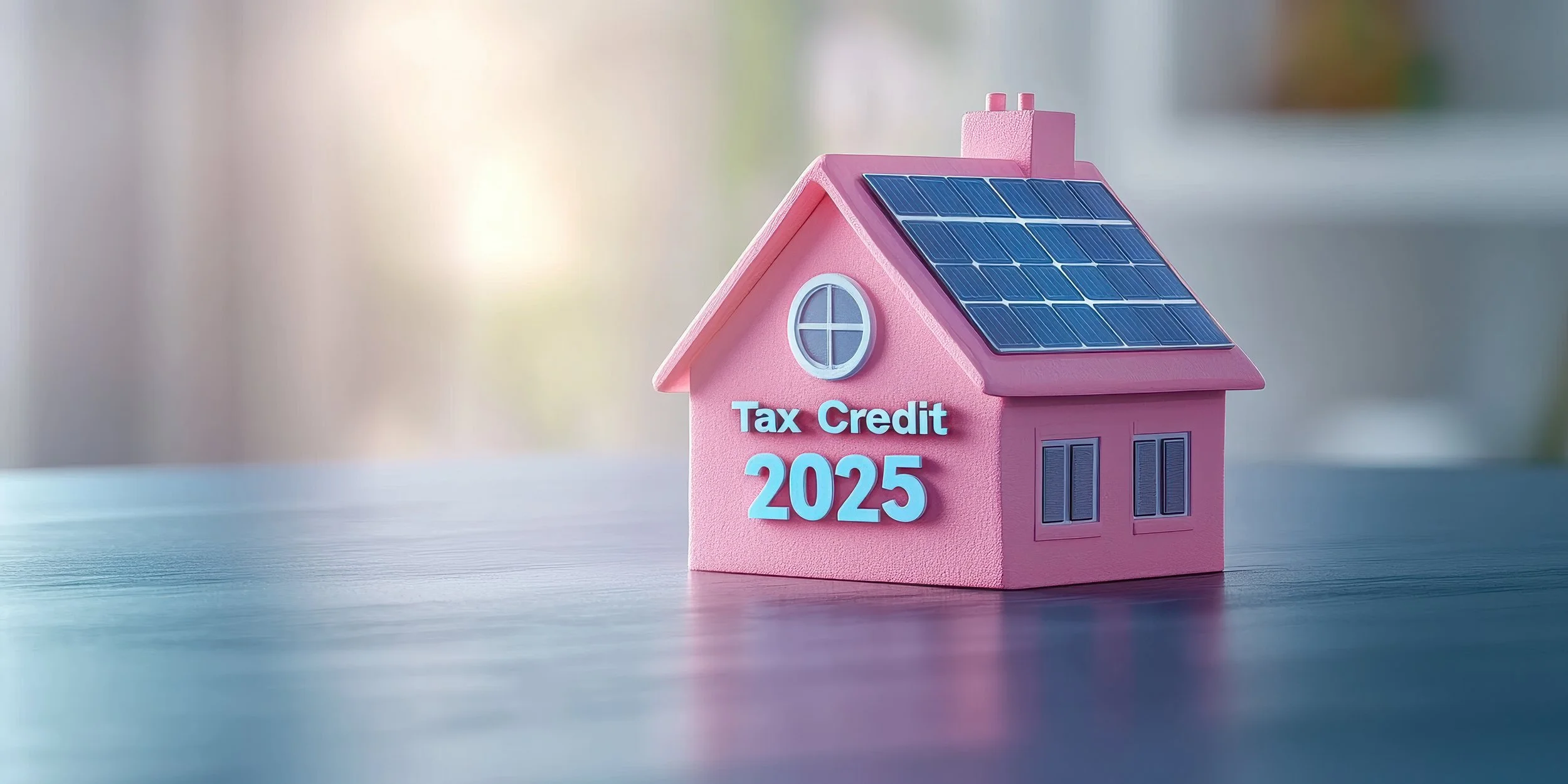
Under President Trump’s One Big Beautiful Bill Act, many federal home-energy tax credits will expire at the end of the year—so people will lose the current tax breaks for adding eco-friendlier appliances or systems like heat pumps and solar panels.
Here is a look at some big improvements that consumers might want to consider before the chance for savings runs out.
Upgrade your HVAC
Right now, the government offers a range of credits for improving your heating and cooling systems. For instance, you can get a Energy Efficient Home Improvement Credit for $600 when you add new natural-gas, propane or oil furnaces, hot-water boilers and air-conditioning units, if they meet certain energy-efficiency standards.
In addition, you can get a credit for installing heat pumps—up to 30% of the cost of purchase and installation, with a $3,200 cap. That is a big chunk of change, since those costs can run between $6,900 and $8,600.
These systems, which draw warm air into your house or remove it, offer big electricity savings in the long term over conventional electric-resistance heaters, says Lucas Davis, a professor at the University of California, Berkeley’s Haas School of Business. Heat pumps can also work as air-conditioning systems.
Of course, those savings depend on a lot of factors. The pumps require more electricity to operate in extremely cold climates, and could ultimately be more costly to buy and operate than natural-gas furnaces, says Davis. That is especially true in states where natural-gas prices are low and temperatures frequently drop below freezing.
Also be sure to find out if you can get any other incentives to offset the cost of the pumps, besides the federal tax breaks. Utilities in Massachusetts and Minnesota, for instance, offer discounted electricity rates for using heat pumps, says Rebecca Foster, CEO of the nonprofit Vermont Energy Investment Corporation.
One potential source of information is an online calculator from the nonprofit Rewiring America that highlights subsidies based on household income and ZIP Code. Each state also has energy-efficiency agencies that can help homeowners find relevant incentives.
Be aware, though: State rebates and subsidies can sometimes reduce the amount of the federal tax credit.
Going for renewables
Tax credits can also get you a break on renewable power. The Residential Clean Energy Credit includes a 30% tax credit for the total installation cost of wind turbines, geothermal heat pumps and solar panels, solar water heaters and solar battery storage.
“On average, residential solar-panel systems cost about $25,000, but it really depends on the size of the home, so a 30% credit is a big savings,” says Kenneth Gillingham, an associate dean and professor at the Yale School of the Environment. Without a discount, it often takes between four and seven years before homeowners are made whole on their solar systems via lower electricity bills, he adds. Batteries, meanwhile, cost about $15,000 and provide backup power generation during storms and the ability to use solar power at night.
(Be aware that there is also a deadline—albeit further off—if you lease solar panels instead of buying them outright. The tax break that installation companies get for their work is set to expire in 2027, and companies might raise their prices in response if the tax break is not extended.)
As with heat pumps, before you invest in solar panels, make sure that they are a good fit for your region. There are high rates of return for panels in places like New England, where electricity prices are high, and utilities often allow homeowners to return electricity they generate back to the grid to receive a credit, a policy often called net metering.
Upgrading electrical systems
The Energy Efficient Home Improvement Credit can offset the cost for electric upgrades for homes with aging systems or homeowners looking to buy new appliances. Consumers can get a $600 credit for panelboards, sub-panelboards, branch circuits and feeders that have a capacity of 200 amps or more.
The maximum amount of credits you can claim is $1,200.
Upgrading an electrical panel typically costs $2,000 to $4,000, says Eric Fournier, an assistant researcher and research director for UCLA’s California Center for Sustainable Communities and Institute of Environment and Sustainability. New wiring, plugs and utility-service upgrades could boost the price to $30,000.
Homeowners with electric panels that are several decades old should consider taking advantage of the tax credit, especially if their panelboards support less than 100 amps and use fuses instead of circuit breakers, he says. The tax credit could also make sense for homeowners considering installing new appliances, like EV chargers, heat pumps or electric stoves.
How to set priorities
If you’re not sure which improvements—if any—to focus on, a home energy audit can help you identify which upgrades to give priority to and which tax credits to claim, says Kim Wolske, a research associate professor at the University of Chicago.
With a home audit, a certified contractor or auditor assesses your appliances, heating and cooling systems, insulation, lighting and writes up recommendations. The audits—which typically cost between $300 and $500—are themselves eligible for a tax credit of $150 via the Energy Efficient Home Improvement Credit.
Credit goes to Lisa Ward, The Wall Street Journal, September 21, 2025
Thank you for all of your questions, comments and suggestions for future topics. As always, they are much appreciated. We also welcome and appreciate anyone who wishes to write a Tax Tip of the Week for our consideration. We may be reached in our Dayton office at 937-436-3133 or in our Xenia office at 937-372-3504. Or, visit our website.
This Week’s Author, Belinda Stickle