
Five Ideas for Helping Solve America's Student-Loan Problem
Student loans | Financial aid | December 10, 2025
"Rise above the storm, and you will find the sunshine."
- Mario Fernandez
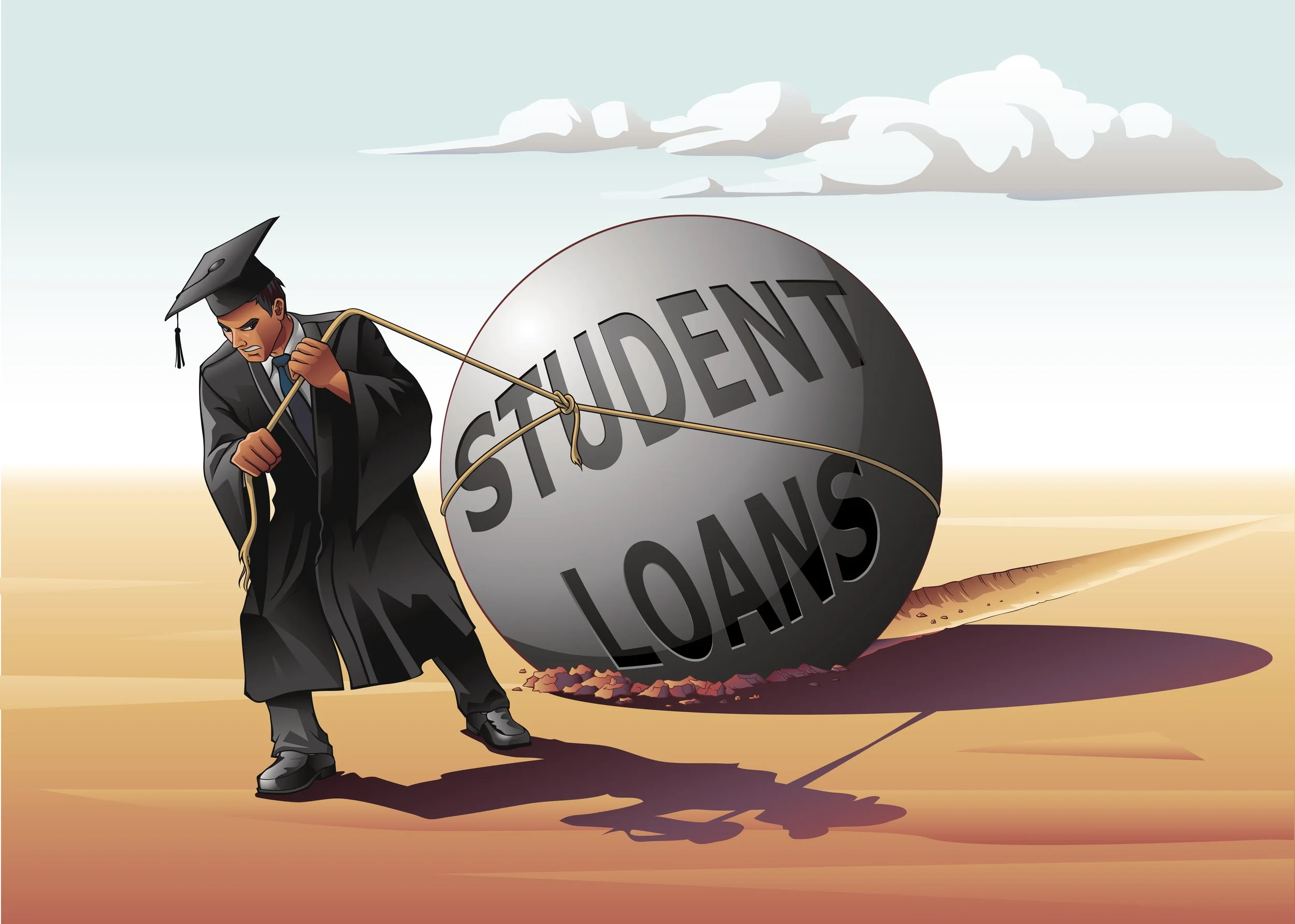
Student loans are weighing down millions of Americans. Many in higher education say it doesn’t have to be that way.
Borrowers often sign up for student loans without realizing how far into adulthood the debt can follow them. The federal government’s retreat from student lending under President Trump has made the prospect of paying for a degree even more daunting. It is enough of a burden that people are rethinking how the country pays for college.
Here are five ideas that are getting attention:
Colleges offer more aid
Schools traditionally offer financial-aid packages that include a mix of tuition discounts and loans. Some colleges are trying to lighten the burden even more.
The University of Notre Dame already covers most tuition costs for students from lower-income families. But it also recently began offering “no-loan financial-aid packages,” which include grants that don’t have to be repaid, to students from middle-income families who are often too wealthy for other types of aid but can’t afford full price.
Notre Dame covered the cost with a combination of donations from alumni and foundations and university funds. Other schools such as Brown University have made similar commitments.
The school is already seeing effects from the change. For its first freshman class offered the aid this fall, Notre Dame said there was an increase in students from middle-income families compared with last year’s freshman class.
Of course, state schools and community colleges without big donors might find it harder to fund such programs.
Automating loan repayment
Employees typically have state and federal taxes automatically withheld from their paychecks. Some say the same could be done for student-loan payments.
Doing so would help borrowers stay on track with payments, said Kristin Blagg, a principal research associate at the Urban Institute who focuses on education-finance policy.
It is already a practice in some countries. In the U.K., for instance, student-loan payments are automatically withdrawn from employees’ salaries like taxes. The amount deducted depends on their earnings, though borrowers can make additional payments.
Borrowers in the U.S. can enroll in autopay with their student-loan servicers, but it isn’t the default.
Workplaces pitch in
Employers benefit from a skilled workforce, and some are offering repayment assistance as a recruiting and retention tool.
The Scholars Network, which connects students and employers, has formed partnerships with about a dozen hospitals and healthcare systems to offer jobs with repayment assistance to students at roughly 40 universities.
Graduates typically have to commit to staying in the job for three years. In exchange, employers make payments toward their loans, with some offering as much as $65,000 in contributions. A portion of the contributions are tax-deductible for employers, said Samuel Maron, founder of the Scholars Network.
Other employers are matching employees’ student-loan payments with contributions to their 401(k)s. The idea is to help workers avoid having to choose between paying off debt and saving for retirement.
Eligible employees at more than 175 workplaces that offer the benefit are earning an average of nearly $2,000 a year toward retirement, according to Fidelity.
A longer grace period
When the federal government paused student-loan payments during the Covid-19 pandemic, borrowers had more money available to pay down credit-card debt, invest or save.
Borrowers could benefit even more from such pauses if they knew when they would be available and how long they would last, said Michael Boutros, assistant professor in the economics department at the University of Toronto.
Letting borrowers postpone repayment for 10 years would let them get on stronger financial footing with little cost to the federal government, according to a paper Boutros co-wrote.
Boutros and his co-authors outlined two ways this could work. The borrower could pay only interest for 10 years before resuming the full loan payment, or postpone both interest and principal payments. In the latter scenario, interest would still accrue on the principal over the 10-year grace period.
States step up
Former President Joe Biden’s sweeping loan-forgiveness effort was struck down, but some states are using the concept to push workers into fields where they are needed.
Colorado created a loan-forgiveness program in 2019 for teachers in rural schools. The program provides teachers with as much as $5,000 for repayments a year for as many as five years.
A program in Hawaii provides as much as $50,000 worth of repayment for healthcare workers if they commit to working in the state for two years.
Elsewhere, repayment assistance is available for low-income borrowers. In New York state, recent graduates can have their federal loan payments covered for as long as two years if they are on an income-driven repayment plan, earn less than $50,000 a year and graduated from a high school and college in New York.
Credit goes to Oyin Adedoyin, Wall Street Journal, October 13, 2025.
Thank you for all of your questions, comments and suggestions for future topics. As always, they are much appreciated. We also welcome and appreciate anyone who wishes to write a Tax Tip of the Week for our consideration. We may be reached in our Dayton office at 937-436-3133 or in our Xenia office at 937-372-3504. Or, visit our website.
This Week’s Author, Mark Bradstreet